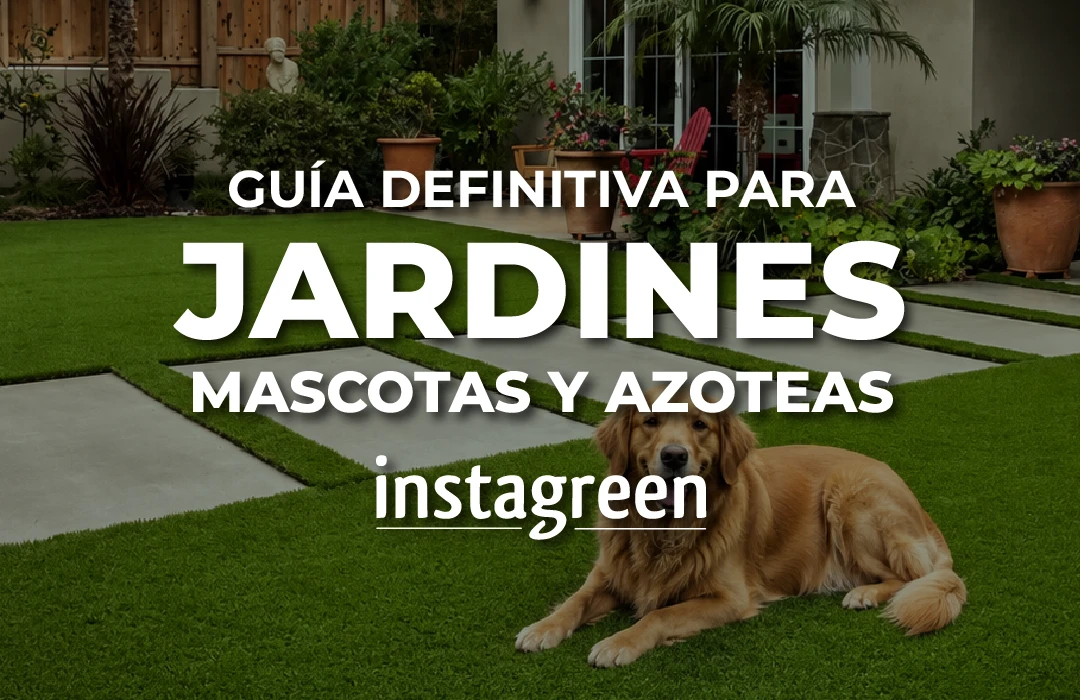
Artificial turf is no longer just for sports fields. Today, it's a very practical solution for residential gardens, rooftops, terraces, play areas, and pet spaces in Costa Rica.
When chosen and installed correctly, it allows you to have a green space year-round:
– No mud when it rains.
– No holes for dogs to dig in.
– No heavy maintenance like mowing, fertilizing, and watering.
But it's also true that there's a lot of confusion: very cheap products that deteriorate quickly, poorly installed systems that smell bad, fields with poor drainage, etc.
In this guide, we explain, in clear language but with technical expertise:
– What types of artificial turf exist and what each is best suited for.
– How professional turf should be installed in Costa Rica.
– How drainage works and what happens to dog urine.
– How long it lasts, whether it fades, and how hot it gets.
– What you should ask a supplier before investing.
TYPES OF ARTIFICIAL GRASS ACCORDING TO USE
Rather than focusing on brand names, the right way to choose artificial grass is to first consider its primary use in your project.
Artificial Grass for Residential Gardens
This type of grass is used in homes, condominiums, and patios where:
– A natural appearance and soft feel are desired.
There is moderate foot traffic.
Sometimes children or pets play, but it's not a sports field.
It typically has:
– Fiber heights between 30 and 40 mm.
– A blend of green fibers with some brown or beige fibers at the base to simulate natural grass.
– Densities designed to look full without creating an overly hard surface.
Artificial Turf for Pet Areas
In areas where dogs are the main attraction (walkways, patios, designated dog areas), it's crucial to prioritize:
– Fast drainage.
– Resistance to repeated urine.
– Ease of cleaning and disinfection.
Here, both the type of backing (the turf's surface) and the preparation of the base, as well as the type of infill used, come into play. A well-designed PU-backed artificial turf for outdoor use, combined with a well-draining base and regular maintenance, greatly helps control odors.
Artificial Turf for Courts and Sports Areas
In schools, condominiums, and sports projects, products designed for the following are needed:
– High traffic.
– Repeated impacts.
– Compatibility with sand and/or rubber infill.
These are more robust fibers, with heights and densities adjusted to the specific sport (5-a-side football, 11-a-side football, multi-sport, golf, etc.).
Artificial Grass for Rooftops and Balconies
On rooftops and balconies, weight and drainage are crucial:
– It is typically installed over pre-waterproofed slabs.
– Solutions are required that allow water to drain without pooling.
– Comfort when walking barefoot and the fact that the grass does not generate excessive heat are highly valued.
IS IT RESISTANT TO OUTDOORS AND COSTA RICA'S CLIMATE?
A synthetic turf designed for outdoor use in tropical climates must meet several criteria:
– Be UV resistant to prevent premature fading.
– Withstand cycles of heavy rain and strong sun.
– Maintain the shape of the fibers without flattening completely in a short time.
– Offer a stable backing, such as traditional high-performance PU.
Low-quality products, designed for indoor use or milder climates, may:
– Fade in a few years.
– Tear or peel at the backing.
– It flattens quickly and looks like an “old carpet.”
That’s why it’s important to always review technical specifications and seek expert advice based on how you plan to use the turf.
HOW TO INSTALL PROFESSIONAL SYNTHETIC TURF
A good installation begins long before unrolling the turf. The base is what will determine if the project drains well, feels firm, and remains stable over time.
In summary, the typical stages are:
Site Preparation
– Removal of natural grass, roots, and loose materials.
– Creation of appropriate slopes for drainage.
– Compaction of the soil with suitable machinery.
Base and Subbase Layers
– Placement of a granular base (ballast, stabilized subbase, or other system) according to the design.
– Compaction in layers until a firm and stable surface is achieved.
Geotextile or Separating Layer
– In many cases, a geotextile layer is placed to:
– Separate the soil from the turf.
– Prevent weed growth.
– Improve load distribution.
Turf Installation
– The pieces are unrolled, respecting the grain direction.
– The sections are adjusted, and fine cuts are made at intersections and corners.
– Appropriate tapes and adhesives are used to join the sections at the seams.
Perimeter Fixing and Infill
– The edges are secured with mechanical fasteners or specific solutions depending on the type of edging (concrete, wood, metal).
– The recommended infill (silica sand, special mix, etc.) is placed to:
– Add weight.
– Keep the fibers upright.
– Improve the feel underfoot.
A well-installed turf looks even, drains well, and has no waves or wrinkles, even after heavy rain.
DRAINAGE, DOG URINE, AND ODORS
One of the most common concerns is:
“Will my yard smell bad if my dog urinates on the artificial turf?”
The reality is that the result depends on three factors:
– The drainage base.
– The type of backing.
– The maintenance it receives.
If the turf is on a compacted base with good drainage capacity, and a backing and infill that allow for water runoff are used, pet urine shouldn't get trapped on the surface.
Best practices for pet areas
– Design the base with water runoff in mind (slopes, drainage, types of material).
– Choose turf suitable for outdoor use and for pets.
– Perform regular cleaning:
– Rinse with water.
– Occasionally use odor-neutralizing products, following the manufacturer's recommendations.
When any of these components fail (sealed base, lack of drainage, complete absence of cleaning), unwanted odors appear.
LIFETIME, DISCOLORATION, AND WARRANTIES
The actual lifespan of synthetic turf depends on:
– The quality of the product (fiber, backing, UV protection).
– The level of use (light foot traffic in gardens vs. intensive sports use).
– The quality of the installation.
– The basic maintenance it receives.
In well-executed residential applications, a good synthetic turf can offer:
– More than 8 to 10 years of lifespan in good condition.
– Gradual, subtle discoloration over time.
In high-traffic sports fields, lifespan is measured more by hours of play and demands, but even so, a well-installed, quality product should last for several years before requiring replacement.
DOES SYNTHETIC TURF GET VERY HOT?
Another common concern is the heat.
It's important to understand that:
– Any surface exposed to strong sunlight will heat up (concrete, ceramic, decking, rubber, etc.).
– Artificial turf can get hot, especially during peak sun hours and in darker colors.
– Even so, it's generally more comfortable to the touch than hard surfaces like ceramic or exposed concrete.
Some recommendations for better managing the heat:
– Choose products suitable for outdoor use and with a pile height designed for comfort.
– Incorporate shade (pergolas, awnings, trees, lightweight structures) in areas where you'll be spending a lot of time.
– In gardens where children play barefoot, you can cool the turf with water during the hottest parts of the day.
ACTUAL MAINTENANCE OF ARTIFICIAL TURF
Compared to natural grass, the maintenance of artificial turf is very low, but it's not zero.
Good Maintenance Practices:
– Remove leaves, debris, and dirt with an air blower or soft broom.
– Perform regular cleaning with water, especially in pet areas.
– Occasionally brush the fibers (depending on the type of product) to keep them upright.
– For sports fields or projects, schedule professional preventative maintenance.
What Not to Do:
– Use harsh chemicals not recommended by the manufacturer.
– Allow heavy vehicles to drive over or park on the turf if it wasn't designed for that load.
– Make cuts or perforations without proper technical guidance.
CHECKLIST FOR CHOOSING A GOOD ARTIFICIAL TURF SUPPLIER IN COSTA RICA
Before making a decision, it's worth checking:
– That the product has technical support and UV protection for outdoor use.
– That the supplier clearly explains what type of turf they recommend for your specific use (garden, pets, sports field, rooftop).
– Ask them to show you projects installed in Costa Rica that have been in use for several years.
– Ask them to provide details not only about the turf, but also:
– What the base will be like.
– What drainage system will be used.
– What type of infill they recommend.
– Ask them to offer a written warranty and clear maintenance conditions.
WHEN DOES IT MAKE SENSE TO WORK WITH INSTAGREEN?
It makes sense to work with a specialist when:
– You want your garden, rooftop, or pet area to look good from day one and continue to function well over time.
– You're looking for a team that is an expert in both the product (types of turf, backing, density) and the engineering aspects (bases, drainage, slopes).
– You need real support in the project design, not just the sale of a roll of turf.
InstaGreen combines expertise in synthetic turf for gardens, pet areas, rooftops, and sports fields, with specific solutions for tropical climates.